

COURSE 013
The Present and Future of the TRT Clinic
STRATEGIC
Learn how telemedicine expansion, regulatory evolution, women's androgen care, peptide normalization, and enhancement culture are reshaping clinical practice. Stronger clinical competency, not broader access alone, defines the future of androgen medicine.
PROGRAM Testosteronology® Professional Education Program, Testosteronology Society®
ESTIMATED TIME TO COMPLETE 65 Minute Video From Dr. O'Connor + 30 Minute Reading/Test
TARGET AUDIENCE Clinicians treating patients with testosterone deficiency, androgen-related conditions, and broader hormonal health challenges.
COURSE FORMAT Evidence-informed clinical education module including text, video, and diagrams
FACULTY DISCLOSURE Authors and reviewers include Thomas O’Connor, M.D., and Omar Hajmousa, PharmD. This educational material is designed as an independent clinical training course. Formal CME accreditation cannot currently be claimed.
CONTENT DISCLOSURE This educational material was developed with editorial assistance from AI technology and then reviewed, revised, and verified by the Testosteronology Society® faculty to ensure accuracy, clinical appropriateness, and educational value.
COURSE PREREQUISITES Courses are structured to be taken in sequence so clinicians can build a coherent clinical framework. Individual courses may be revisited anytime for refresher learning or when a patient presentation relates to a topic addressed in the curriculum.
IMPORTANT NOTE The course material is provided for general educational and informational purposes only. It is not intended to serve as medical advice, diagnosis, or treatment recommendations for any specific individual.
COURSE 013 OVERVIEW
Modern TRT clinics now sit at the intersection of endocrine medicine, telemedicine, wellness culture, enhancement medicine, peptides, anabolic steroids, and longevity-focused healthcare. What began as a market response to unmet patient need has become a multi-billion-dollar industry operating in a space that traditional medicine never fully claimed and regulators have never fully defined. The next era will not be a simple contest between TRT clinics and traditional endocrinology. It will be a collision between access, autonomy, telemedicine law, controlled-substance obligations, women's androgen care, peptide normalization, underground market persistence, sports enhancement culture, and the growing expectation that harm reduction is as legitimate a clinical task as treating documented deficiency. These forces are converging simultaneously, and clinicians who practice in this environment will need to understand all of them.
This course covers why TRT clinics expanded, how telemedicine changed access and accountability, what Schedule III status actually requires, how FDA indications are shifting, what women's androgen therapy demands clinically, how peptides and anabolic steroids have entered mainstream practice, why the underground market will persist even as clinic access expands, and what the Enhanced Games and social media normalization mean for the patients clinicians see every day. It closes with a forward-facing clinical model built on classification, monitoring, harm reduction, and defensible documentation.
COURSE 013 LEARNING OBJECTIVES
After completing this course, clinicians should be able to:
① Explain why TRT clinics expanded outside conventional endocrine care and what clinical and regulatory tensions that expansion created.
② Describe how telemedicine changed testosterone prescribing and monitoring, including current flexibilities and documentation requirements.
③ Recognize how Schedule III regulation affects clinical obligations and what each descheduling scenario would mean for practice
④ Distinguish replacement medicine from optimization, enhancement, and harm-reduction models and explain why each requires different documentation and monitoring logic.
⑤ Understand how FDA indication changes for men and the absence of FDA-approved options for women will shape future practice.
⑥ Identify important clinical considerations in women's androgen therapy, including dosing, virilization risk, and monitoring requirements.
⑦ Recognize peptides as part of the modern enhancement ecosystem and apply a practical intake framework when patients report use.
⑧ Incorporate anabolic steroid and iPED exposure into clinical evaluation, including the full compound history relevant to modern practice.
⑨ Apply harm reduction principles without normalizing reckless enhancement, using the Tyler Hooton Foundation case as a clinical anchor for why abrupt discontinuation without psychiatric support is dangerous.
⑩ Describe the future monitoring framework of Testosteronology® and apply ABCDS™ to long-term androgen care.
COURSE 013 TOPICS
The following topics will be covered in the course text, video, diagrams or downloadable documents:
① Why TRT Clinics Expanded Beyond Traditional Endocrinology
② Telemedicine And National Testosterone Access
③ Testosterone As A Schedule III Controlled Substance
④ Optimization Medicine And Modern Patient Expectations
⑤ FDA Indications And Future Testosterone Expansion
⑥ Women's Hormone Clinics And Female Androgen Therapy
⑦ Peptides And The Wellness-To-Enhancement Pipeline
⑧ Anabolic Steroids Inside Modern Hormone Practice
⑨ IPED History As Required Clinical Data
⑩ Harm Reduction And Underground Compound Exposure
⑪ Sports Enhancement, Social Media, And The Enhanced Games
⑫ The Future Clinical Direction Of Testosteronology®
“The future of testosterone medicine depends on clinicians who can balance access, accountability, exposure history, harm reduction, and patient safety with disciplined Testosteronology® decision-making.”


Thomas O'Connor, M.D.
Founder / CEO
THIS ENDS THE NON-MEMBER PREVIEW OF THIS COURSE
Become an Associate Testosteronologist® and unlock the complete 15-Course Educational Program from the Testosteronology Society® to advance your clinical knowledge in testosterone and androgen medicine.
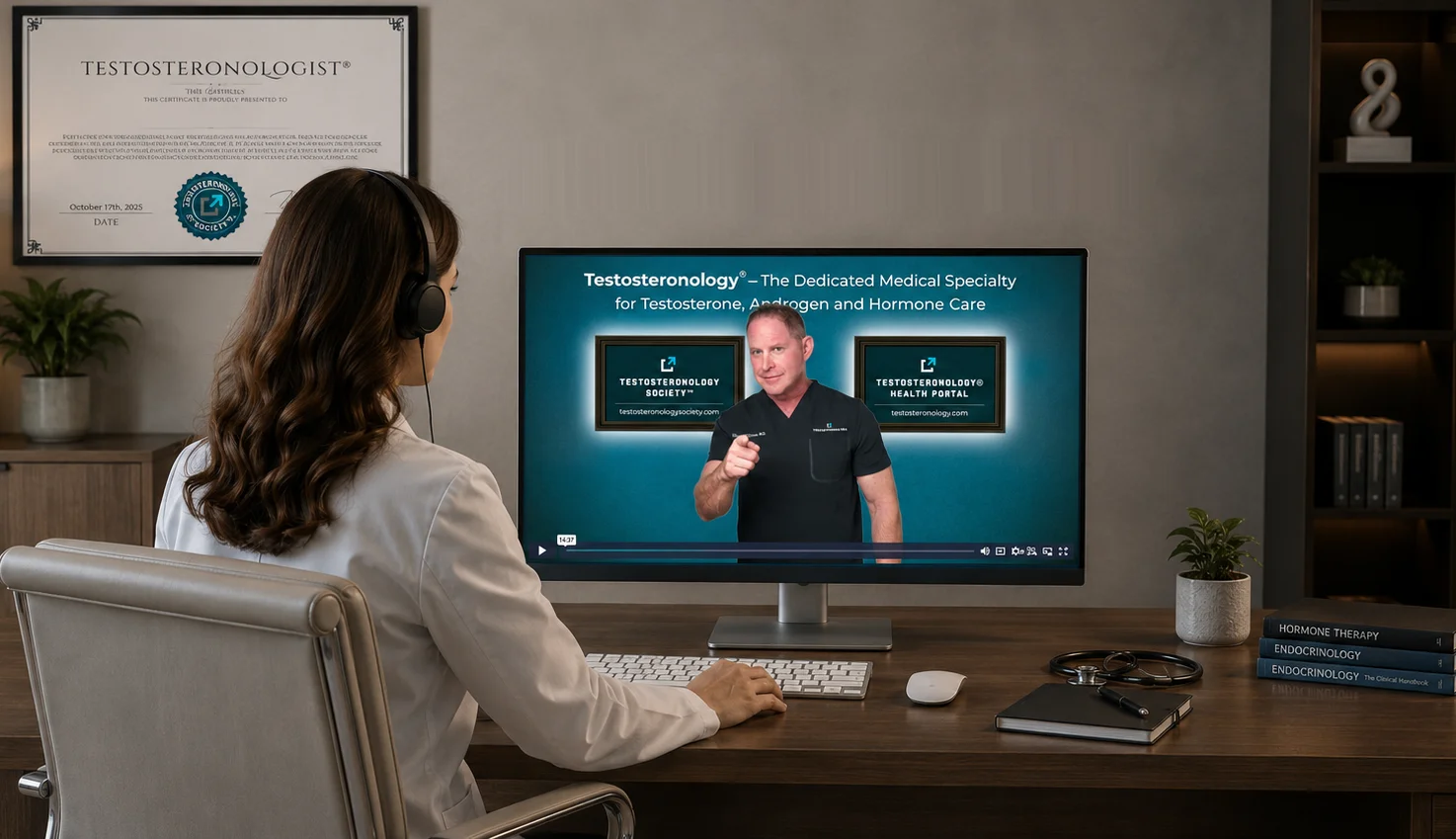
ASSOCIATE TESTOSTERONOLOGIST®
Testosteronology® Professional Education Program + One Year Society Membership
$495 $395
◉ Access To The 15 Course Testosteronology® Professional Education Program
◉ Access To The Official Society TRT Guidelines
◉ Access To The Topic Presentations Library
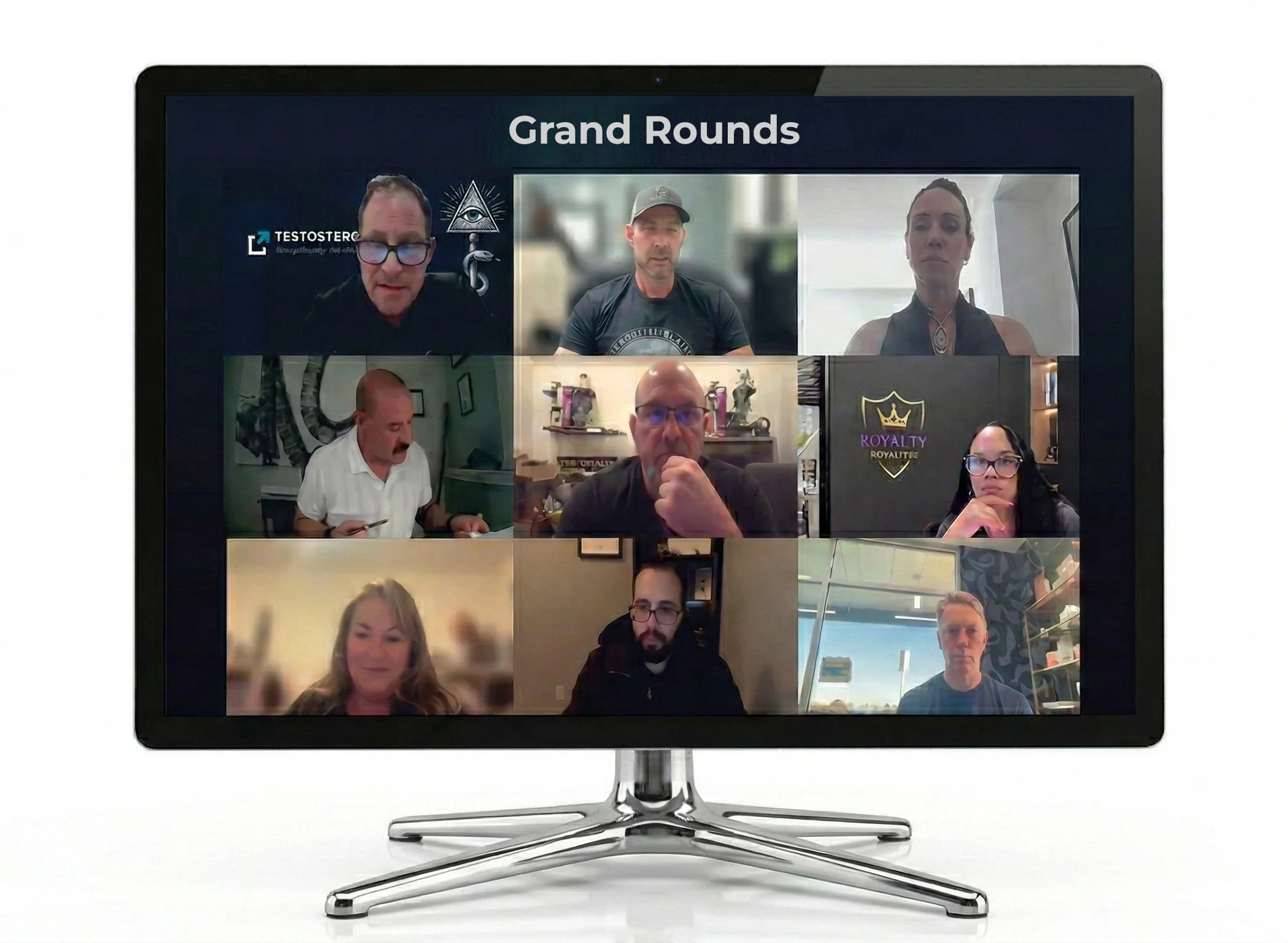
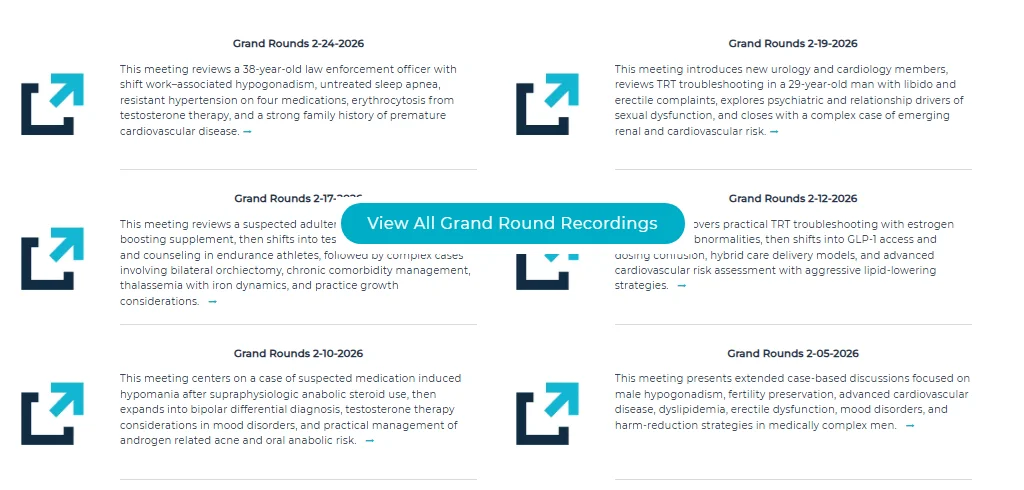
◉ Access To Grand Rounds Recording Library
◉ Monthly Live Q&A Training Group Session
◉ Ongoing Clinical Education Updates
◉ Weekly Testosteronology Society® Insights Newsletter
◉ Professional Testosteronology Society® Member Designation
◉ Access To The Testosteronology Society® Website
013 The Present and Future of the TRT Clinic
65 MINUTE COURSE TRAINING VIDEO
With Thomas O'Connor, M.D. Founder / CEO Testosteronology Society®
Video Lesson Takeaways
◉ Modern TRT clinics now operate at the intersection of replacement medicine, telemedicine, enhancement culture, peptides, anabolic steroids, and long-term chronic disease management.
◉ The growth of TRT clinics was driven by patients whose symptoms were not adequately addressed within traditional healthcare models despite ongoing quality-of-life concerns.
◉ Telemedicine expanded testosterone access nationwide, but remote prescribing requires stronger documentation, monitoring, and follow-up discipline rather than less.
◉ Testosterone remains a controlled substance, and every prescription should be supported by a clear indication, defensible reasoning, and a structured monitoring plan.
◉ Not every patient seeking testosterone is pursuing the same goal, making accurate classification essential before treatment decisions are made.
◉ Replacement, optimization, enhancement, and harm-reduction medicine may overlap in practice, but they should never be treated as identical clinical scenarios.
◉ Potential future FDA indication changes could expand access to testosterone therapy, but broader eligibility will not eliminate the need for careful evaluation.
◉ Female androgen therapy remains an important area of unmet need and requires thoughtful dosing, close monitoring, and clear informed consent.
◉ Peptides have become common in hormone-focused practices, making comprehensive exposure histories more important than ever.
◉ Modern clinicians must routinely ask about anabolic steroids, SARMs, peptides, and other performance-enhancing drugs because patients often omit them unless specifically questioned.
◉ A complete iPED history can dramatically change laboratory interpretation, risk assessment, fertility planning, and treatment strategy.
◉ Harm reduction is not approval of risky behavior; it is a clinical commitment to keeping patients engaged, monitored, and safer over time.
◉ Abruptly telling patients to discontinue anabolic agents without psychiatric support or a structured plan can create serious unintended consequences.
◉ Social media, physique culture, and events such as the Enhanced Games are shaping patient expectations before they ever enter the examination room.
◉ The future of Testosteronology® depends on disciplined classification, longitudinal monitoring, comprehensive risk assessment, and documentation that withstands scrutiny.
◉ ABCDS™ provides a framework for monitoring the whole patient rather than focusing exclusively on hormone levels.
COURSE 013 TEXT
① Why TRT Clinics Expanded Beyond Traditional Endocrinology
Traditional endocrinology, urology, and internal medicine treated testosterone deficiency narrowly. The diagnostic threshold was tight, the diagnostic language was disease-based, and many clinicians who felt uncomfortable with a controlled substance and a liability-heavy black box warning simply did not participate. Patients with persistent symptoms and borderline laboratory values were told their numbers were normal, their concerns were age-related, and the visit was over.
Those patients sought care at TRT clinics. For over twenty years, cash-pay direct-to-consumer testosterone clinics expanded outside traditional medical structures, offering symptom-focused care, longer consultations, and treatment thresholds that reflected what patients were actually experiencing rather than what insurance or narrow guidelines sanctioned.[1] Libido, energy, mood, body composition, recovery, and fertility goals drove that demand, not laboratory numbers alone.
The modern TRT clinic now attracts a population far more complex than earlier models anticipated. Some patients genuinely have androgen deficiency and need replacement. Others seek optimization, physique restoration, or recovery from prior anabolic steroid exposure. A growing number enter care having already used underground compounds, and their first goal is not stopping. It is finding a clinician who will not refuse to see them. These motivations are not clinically equivalent, and a practice that documents them all the same way creates unnecessary clinical and regulatory risk. Emerging androgen-treated populations, including transgender men, require careful monitoring rather than automatic assumptions about hematologic reference ranges.
② Telemedicine And National Testosterone Access
Telemedicine removed geographical constraints from TRT. Before the pandemic, prescribing controlled substances remotely was complicated, legally uncertain, and practically limited. After the COVID-19 era, a patient in a rural area or a busy professional who had never been near a hormone clinic could obtain evaluation, laboratory review, and a prescription without leaving home. Federal telemedicine flexibilities for Schedule II through V controlled substances remain extended through December 31, 2026, allowing DEA-registered clinicians to prescribe under required conditions.[2]
That expansion solved real problems. Patients in underserved regions gained access to care they needed. Continuity improved for patients who moved between cities or managed demanding schedules. Some patients who had been self-medicating with underground compounds came into medical care for the first time.
Telemedicine also created vulnerabilities that track exactly with the weaknesses that draw regulatory attention. A patient whose intake is a questionnaire, whose laboratory confirmation is a single panel, and whose prescribing dose never changes regardless of what the labs show is not a telemedicine success story. High-volume remote systems can replace clinical judgment with automation at exactly the moments when clinical judgment is most needed: when a new finding appears, when the dose doesn’t match the patient's response, when erythrocytosis is rising and no one is asking about it. Strong telemedicine requires structured intake, monitoring, follow-up, and documentation.
③ Testosterone As A Schedule III Controlled Substance
Testosterone and most anabolic steroids remain Schedule III controlled substances in the United States.[3] That classification did not emerge from clinical evidence about deficiency management. It emerged from athletic abuse, the cheating culture of the 1980s, and the Anabolic Steroid Control Act of 1990, which was designed to address elite sport and youth exposure, not to regulate the treatment of aging men with documented hypogonadism or suppression from prior exposure. The law has not caught up with clinical reality. Clinicians must understand both.
Schedule III status means that documentation matters more. A clinician prescribing testosterone must be able to explain the indication, the supporting evidence, the confounders evaluated, the counseling provided, and the monitoring strategy. Weak documentation is harder to defend in a controlled-substance environment because the concern is no longer just incomplete medicine; it is whether the prescribing itself was appropriate. State variation adds complexity: New York classifies testosterone as a Schedule II substance, placing it alongside most opioids and stimulants.[4]
Three scenarios for the future deserve clinical awareness. The first is that testosterone stays Schedule III with increased DEA and medical board scrutiny focused on high-volume telemedicine prescribers. The second is that testosterone is descheduled or rescheduled, greatly expanding access but creating an immediate need for clinical guardrails because the absence of controlled-substance requirements will not reduce the clinical complexity of the drug or the harm it can cause without monitoring. The third, most realistic in the near term, is that testosterone remains controlled but FDA indications expand, making the classification less of a gatekeeping mechanism but no less of a documentation obligation.
④ Optimization Medicine And Modern Patient Expectations
Many patients now present because they have seen what someone else became, online or in a gym, and they want it. Optimization culture transformed the emotional meaning of testosterone from a medication for deficiency into a tool for performance, appearance, masculinity, confidence, and resistance to aging.[5] Social media accelerated that transformation until pharmacologically enhanced physiques began to function as the default comparison point for ordinary men's self-assessment.
The problem a clinician encounters is that the symptoms they describe are highly nonspecific. Fatigue, low libido, poor recovery, reduced motivation, and body-composition dissatisfaction are nonspecific symptoms that may require broader evaluation. When a patient's testosterone is within a lower limit normal and his chief complaint is that he does not feel like himself, the first question is not whether to treat. The first question is what is actually driving the symptom.
This matters for practice structure as well as individual decision-making. A clinic built around optimization language such as vitality, performance, masculinity, and restoration is in a different regulatory and ethical position than a clinic built around diagnosis, evidence, and monitoring.[5]
⑤ FDA Indications And Future Testosterone Expansion
FDA-approved testosterone products have historically required a structural or genetic diagnosis of hypogonadism, whether primary or secondary, with a clearly identified cause.[6] That narrow labeling created a permanent gap between what regulators approved and what TRT clinics actually treated, because most symptomatic patients presenting today have functional suppression from obesity, cardiometabolic disease, aging, prior AAS exposure, or no identifiable cause. The regulatory and clinical frameworks have been describing different patient populations for twenty years.[6]
The FDA discussion in April 2026 signaled movement toward a supplemental indication for idiopathic hypogonadism with associated low libido, potentially opening a pathway for symptom-based androgen deficiency even when structural pathology is absent.[7,8] If that pathway advances, it would represent a major potential labeling change. What it would not do is make testosterone casual medicine. Broader labeling means a larger patient population entering the evaluation stream, not a reduced need for diagnostic discipline.
Clinicians should follow this regulatory development closely while continuing to practice under current standards. A likely future approval changes nothing about today's obligations: documented symptoms, confirmed laboratory values, repeat confirmation where guidelines require it, and a clear distinction between medically indicated replacement and patient-requested enhancement.[6-8]
⑥ Women's Hormone Clinics And Female Androgen Therapy
No FDA-approved testosterone product exists for women in the United States. Every female testosterone prescription is currently off-label.[9] That is a reason to practice with more precision than a label requires, because the documentation must make the case that would otherwise have been made by the approval itself.
Women with hypoactive sexual desire disorder, surgical menopause, premature ovarian insufficiency, or symptomatic androgen deficiency following oophorectomy represent real clinical populations with real unmet need.[9] The demand will continue growing whether or not FDA acts, and clinicians who dismiss it entirely cede those patients to providers who may not practice carefully.
Female androgen therapy is not male TRT at a smaller dose. Dose sensitivity is substantially greater. Virilization risk, including acne, clitoral enlargement, voice lowering, and hair changes, can occur at doses that would have no visible effect in men. The therapeutic margin is narrower and dose titration must be slower. Transdermal formulations at low doses are the standard approach in published global consensus guidelines; injectable formulations can create dose-control problems because of their concentration.[9] Product variability in compounded preparations creates additional uncertainty that should be communicated to patients in informed consent before therapy begins.
⑦ Peptides And The Wellness-To-Enhancement Pipeline
Peptides moved from underground bodybuilding forums to mainstream wellness clinics without adequate clinical evidence moving with them. BPC-157, TB-500, CJC-1295, ipamorelin, growth hormone secretagogues, GLP-related agents, and dozens of experimental research chemicals now appear in patient medication histories that a few years ago would have listed only testosterone and an aromatase inhibitor. Growth hormone and GH-secretagogue use deserves special caution because long-term safety concerns remain difficult to resolve, especially in patients with cancer risk or occult malignancy[10].
Some peptides are legitimate medicines in defined clinical settings. Insulin, growth hormone, and GLP-1 agonists are legitimate medicines in defined clinical settings. Others exist in a gray zone between compounding and research use, with uncertain sterility, purity, and human safety data. As of May 2026, the Department of Health and Human Services (HHS) is reviewing certain peptides for potential reclassification, and regulatory status should be verified before prescribing or counseling. Clinically, non-approved peptide use should be treated as IPED exposure unless the product is clearly FDA-approved, quality-controlled, and medically indicated.
Patients often move through a pipeline without recognizing the progression: growth hormone secretagogues because they sound mild, then SARMs because they sound selective, then testosterone esters when neither produced the result they wanted. Some beneficial questions to ask a patient include: what are you taking, where did it come from, who told you to take it, what else are you taking with it, and what are you trying to achieve?
⑧ Anabolic Steroids Inside Modern Hormone Practice
Anabolic steroid use is no longer limited to elite athletes or bodybuilders. Some patient stories may include the executive on oxandrolone who has never taken testosterone, the patient using nandrolone for joint pain, or the 23-year-old in a TRT clinic with testosterone that reads low once because he has been suppressing himself on SARMs for eight months. These are not hypothetical patients.[11]
Some U.S. clinics have responded to this reality by prescribing supraphysiologic testosterone, nandrolone, oxandrolone, and growth hormone secretagogues under optimization language, effectively delivering medically supervised enhancement without naming it as such. The problem is not only legal and regulatory. It is clinical. A patient who receives nandrolone for vague joint complaints without a documented indication, monitoring plan, and frank discussion of HPG-axis suppression, fertility impact, lipid effects, and post-use recovery may be harmed rather than helped, regardless of whether the chart uses clinical language.
The alternative is not to refuse care to AAS-exposed patients. It is to understand the pharmacology well enough to ask the right questions and document the real clinical picture. A clinician who gives testosterone to a patient whose LH and FSH are suppressed from blast-and-cruise patterns is not treating hypogonadism. They are continuing a hormonal pattern the patient started without medical supervision and calling it treatment. If the patient is already suppressed, the suppression should be named, its likely cause should be documented, and the management plan should explain why continuation of testosterone is medically preferable to attempting recovery, or why recovery is planned and what it involves.[11,12]
⑨ IPED History As Required Clinical Data
Image and performance enhancing drug history now belongs beside the medication history, the sexual history, and the substance-use history on every intake form that encounters this patient population.[13] Asking only whether a patient uses testosterone misses too much of what determines laboratory interpretation, risk stratification, and management planning.
The relevant history covers more than compound names. Testosterone esters, nandrolone, oxandrolone, trenbolone, stanozolol, boldenone, DHT-derived agents, SARMs, prohormones, clenbuterol, thyroid preparations, growth hormone, insulin, diuretics, stimulants, peptides, aromatase inhibitors, SERMs, and products obtained from overseas pharmacies or research-chemical vendors can all affect the clinical picture. So can the pattern of use. A patient using a SARM for physique while telling the clinician he is drug-free may genuinely believe SARMs are in a different category.
A useful IPED history is direct: compound, source, dose if known, route, duration, cycle pattern, last use, adverse effects noticed, prior cessation attempts and how they went, monitoring history if any, fertility goals, and the subjective reasoning for IPED use. That last question matters more than most clinicians expect, because the purpose behind the exposure changes the interpretation. A patient using a compound for appearance and a patient using it for recovery from prior suppression carry different risk profiles, different readiness for cessation, and different clinical needs. Without that information, the clinician is interpreting labs through fog, and making decisions without the data that would change them.
⑩ Harm Reduction And Underground Compound Exposure
The underground market will not disappear when prescription testosterone access improves. It will change shape. Testosterone users who can access a TRT clinic may migrate. But underground and novel compounds that no legitimate clinic should prescribe will persist because they offer what medicine cannot and should not: higher doses, non-approved agents, lower prices, and access without accountability.[11]
A patient may receive prescription testosterone from a clinic while privately using other compounds. Another may use underground testosterone for years, then arrive at medical care only when infertility, erythrocytosis, severe hypertension, mood collapse, or liver damage appears. In both cases, the prescription list does not tell the whole story, and the clinician who assumes it does will miss the real exposure pattern and the real risk.
Harm reduction in this context means the clinician will not abandon patients who are using compounds that cannot be prescribed, will not pretend that continuation is safe when it is not, will document the real exposure and the real risks discussed, will monitor the markers that matter, and will build enough trust that when the patient is ready to consider cessation the clinician will be the one they talk to. The alternative to harm reduction is not a drug-free patient. It is a patient who lies, avoids care, and absorbs preventable harm alone.
The Taylor Hooton Foundation case should be understood by every clinician in this field.[14] Tyler was sixteen, on steroids, brought by his father to a physician who told him to stop and sent him home. He went into a withdrawal-related depression and died by suicide. That case illustrates a foreseeable danger: "Stop everything" is not conservative medicine in this population. It can be dangerous when applied without clinical judgment about who can tolerate it and what support they need.
⑪ Sports Enhancement, Social Media, And The Enhanced Games
Enhancement culture now shapes what ordinary patients expect when they walk into a clinical encounter. Social media physiques, transformation narratives, and public figures who discuss testosterone openly have made pharmacologically enhanced bodies appear to be the natural outcome of effort.[5] Patients compare themselves against images that are chemically supported and interpret their own fatigue, body composition, libido, or recovery as a personal medical failure. That comparison happens before the patient ever meets a clinician, and it shapes every conversation about goals, expectations, and what counts as success.
Professional bodybuilding, powerlifting, strongman, and most competitive physique sports operate with universal AAS use. That is not a secret. What it creates clinically is a normalization cascade. Adolescents and young adults who look up to those athletes internalize the expectation that the enhanced body is achievable through effort alone, pursue it that way, fail, and then turn to compounds to close a gap that never had a non-pharmacologic solution. The fake naturals problem is not a sports ethics issue. It is a body dysmorphia feeder that drives patients into experimentation before they understand what they are doing.
The Enhanced Games held their inaugural event in Las Vegas in May 2026, openly permitting performance-enhancing drug use under claimed medical supervision.[16] The event drew immediate criticism from WADA and traditional sports organizations.[15] Whether the Enhanced Games succeeds or fails as a competitive entity is not the clinical question. The clinical question is what it signals: that openly enhanced sport is moving toward normalization for adults, that the pressure on younger athletes will increase proportionally, and that the 21-and-under boundary matters more now than it did before. A clinician who does not understand this cultural context will misread patient motivations, underestimate risk tolerance, and miss the body-image drivers that make cessation harder than pharmacology alone explains.
⑫ The Future Clinical Direction Of Testosteronology®
The future TRT clinic cannot function safely as either rigid gatekeeping or unrestricted access. Rigid gatekeeping leaves suppressed, harmed, and psychiatrically unstable patients without care and drives them back to underground networks. Unrestricted access without standards becomes medicalized harm at scale. A $10,000-a-month compound list is not a treatment plan; it is a liability waiting to be audited and a patient waiting to be harmed.
The next generation of androgen-focused medicine requires more clinical competency, not less. Internal medicine literacy is the foundation. Testosterone and its associated medications interact with cardiometabolic, renal, hepatic, psychiatric, and oncologic systems in ways that demand exactly the clinical breadth that a primary care-trained physician brings. Specialty literacy is also required: the endocrinology of the HPG axis, the urology of prostate health and fertility, the nephrology of erythrocytosis-related renal stress, the psychiatry of withdrawal dysphoria and body dysmorphia, and the harm-reduction model that keeps high-risk patients engaged rather than lost.
ABCDS™ provides the monitoring structure that makes this complexity manageable over time. Glycemic status, blood pressure, cardiovascular and lipid risk, hematologic and iron depletion patterns, and broader screening responsibilities, including mental health, cancer risk, sexual health, and kidney disease, are not separate tasks. They are a single framework for keeping the patient whole while androgen therapy does its work or while harm reduction moves the patient toward safer physiology. A urologist who prescribes testosterone and sends every erythrocytosis case to hematology has not done harm reduction. A TRT clinic that monitors testosterone and ignores blood pressure and hematocrit has not done medicine. ABCDS™ closes that gap.
The future direction is not about access alone. It is about what happens to the patients after access is granted. The Testosteronologist® of the future asks harder questions than earlier clinic models asked: What is the patient actually using? What risks already exist? Which goals are medically legitimate and which are enhancement-driven? What should not be prescribed even when the patient requests it? What needs monitoring before harm becomes irreversible?
COURSE 013 SUMMARY
Modern TRT clinics now operate inside a clinical environment where testosterone replacement, optimization medicine, telemedicine, peptides, anabolic steroids, women's hormone care, underground markets, and enhancement culture overlap without clean boundaries. The future of androgen-focused medicine will require stronger clinical discipline, not broader access alone. The goal is to create a clinical standard capable of managing the world that already exists while reducing the preventable harm that occurs when medicine looks away.
COURSE 013 EVALUATION
The Present and Future of the TRT Clinic
This self-evaluation helps you confirm your understanding of the course material. There is no passing or failing score — it is a tool for reflection and review.
Course 013 Reviewed
You have completed the self-evaluation for The Present and Future of the TRT Clinic. Congratulations on completing the full Testosteronology® curriculum self-evaluation series.
Question Summary
COURSE 013 REFERENCES
- Handelsman DJ. Global trends in testosterone prescribing, 2000-2011: expanding the spectrum of prescription drug misuse. Med J Aust. 2013;199(8):548-551.
- U.S. Department of Health and Human Services. HHS and DEA extend telemedicine flexibilities for prescription of controlled medications through December 31, 2026. Published January 2, 2026.
- U.S. Drug Enforcement Administration, Diversion Control Division. Controlled Substances by CSA Schedule. U.S. Department of Justice; 2026.
- New York State Department of Health. New York State Schedule of Controlled Substances. Title 10 NYCRR Part 80.
- Pope HG Jr, Khalsa JH, Bhasin S. Body image disorders and abuse of anabolic-androgenic steroids among men. JAMA. 2017;317(1):23-24.
- U.S. Food and Drug Administration. FDA Drug Safety Communication: FDA cautions about using testosterone products for low testosterone due to aging. Published March 3, 2015.
- U.S. Food and Drug Administration. FDA takes step forward on testosterone therapy for men. Published April 16, 2026.
- U.S. Food and Drug Administration. Potential new indication for testosterone replacement therapy. Federal Register. Published April 20, 2026.
- Davis SR, Baber R, Panay N, et al. Global consensus position statement on the use of testosterone therapy for women. Climacteric. 2019;22(5):429-434.
- Siebert DM, Rao AL. The use and abuse of human growth hormone in sports. Sports Health. 2018;10(5):419-426.
- Kanayama G, Hudson JI, Pope HG Jr. Illicit anabolic-androgenic steroid use. Horm Behav. 2010;58(1):111-121.
- Rahnema CD, Lipshultz LI, Crosnoe LE, et al. Anabolic steroid-induced hypogonadism: diagnosis and treatment. Fertil Steril. 2014;101(5):1271-1279.
- McVeigh J, Begley E. Anabolic steroids in the UK: an increasing issue for public health. Drug Alcohol Depend. 2017;180:18-26.
- Hooton D. Testimony before the U.S. House Committee on Government Reform. March 17, 2005. Taylor Hooton Foundation.
- World Anti-Doping Agency. World Anti-Doping Code 2025. World Anti-Doping Agency; 2025.
- Reuters. Greek swimmer cashes in with world record at Enhanced Games. Published May 25, 2026.
Recommended Grand Rounds Case Reviews
Testosteronology® Professional Education Program