
FOUNDATION
COURSE 001
Introduction To Testosteronology®
Learn how testosterone and broader androgen care evolved into a complex clinical field, and why modern clinicians need a disciplined framework for diagnosis, prescribing, monitoring, interdisciplinary coordination, and harm reduction across real-world patient presentations.
PROGRAM Advanced Clinical Training Program, Testosteronology Society™
ESTIMATED TIME TO COMPLETE 45 Minutes Reading + 36 Minute Video
TARGET AUDIENCE Clinicians treating patients with testosterone deficiency, androgen-related conditions, and broader hormonal health challenges.
COURSE FORMAT Evidence-informed clinical education module including text, video, and diagrams
FACULTY DISCLOSURE Authors and reviewers include Thomas O’Connor, M.D. and Omar Hajmousa, PharmD. This educational material is designed as an independent clinical training course. Formal CME accreditation can not currently be claimed.
CONTENT DISCLOSURE This educational material was developed with editorial assistance from AI technology and then reviewed, revised, and verified by the Testosteronology Society™ faculty to ensure accuracy, clinical appropriateness, and educational value.
COURSE PREREQUISITES Courses are structured to be taken in sequence so clinicians can build a coherent clinical framework. Individual courses may be revisited anytime for refresher learning or when a patient presentation relates to a topic addressed in the curriculum.
IMPORTANT NOTE The course material is provided for general educational and informational purposes only. It is not intended to serve as medical advice, diagnosis, or treatment recommendations for any specific individual.
Course Overview
Introduction To Testosteronology® belongs at the beginning of the curriculum because androgen medicine is easy to oversimplify. If it is taught only as a question of symptoms, serum levels, and dose titration, the learner misses the larger clinical reality. Testosterone entered medicine through a major endocrine breakthrough in 1935, but the field that followed was shaped not only by science, but also by pharmaceutical expansion, athletic misuse, anti-doping policy, federal regulation, traditional medical reluctance, and the later rise of commercial testosterone clinics. Those forces still affect how clinicians think, how patients arrive, and why modern care often drifts toward either avoidance or overstandardized protocol medicine. [1-6]
This course introduces Testosteronology® as a medicine-first framework for managing testosterone and broader androgen exposure in real clinical settings. The goal is not to glorify older eras of hormone therapy or to condemn every modern access model. The goal is to understand why the field became fragmented and why responsible care now has to include diagnostic discipline, structured monitoring, documentation quality, interdisciplinary judgment, and harm reduction when patients are already using anabolic agents or other iPEDs. That framing sets up every later course in the program. [7-13]
Learning Objectives
After completing this course, clinicians should be able to:
➀ Explain how the discovery of testosterone and the later development of anabolic-androgenic compounds shaped modern androgen medicine.
➁ Describe how therapeutic use, athletic misuse, anti-doping structures, and federal regulation changed the clinical and cultural status of testosterone and related agents.
➂ Recognize why decades of medical reluctance contributed to fragmented androgen care and helped create the modern TRT and wellness-clinic marketplace.
➃ Define Testosteronology® as a medicine-first clinical discipline that integrates internal medicine, endocrinology, cardiometabolic risk management, hematology, psychiatry, reproductive considerations, and longitudinal monitoring.
➄ Explain why modern androgen care requires more than prescribing, including diagnostic discipline, structured follow-up, documentation quality, interdisciplinary coordination, and harm-reduction thinking for patients with ongoing anabolic steroid or iPED exposure.
Course Topics
The following topics will be covered in the course text, video, diagrams or downloadable documents:
➀ Why This Course Comes First
➁ The Discovery Of Testosterone In 1935
➂ The Golden Era Of Anabolic Steroid Development
➃ When Androgen Medicine Split Between Therapeutics And Performance
➄ The 1990 Regulatory Turning Point
➅ Why Traditional Medicine Pulled Back
➆ The Rise Of TRT Clinics, Wellness Models, And Telemedicine
➇ The Current Clinical Crisis In Androgen Care
➈ Defining Testosteronology®
➉ The Mission Of This Training Program
“Testosteronology® is the modern clinical discipline dedicated to understanding, prescribing, and safely managing testosterone and androgens across the full spectrum of human health and performance.”

Thomas O'Connor, M.D.
001 Introduction To Testosteronology®
36 MINUTE COURSE TRAINING VIDEO
With Dr. Thomas O'Connor Founder / CEO Testosteronology Society™
Video Lesson Takeaways
◉ Testosterone was isolated and synthesized in 1935, establishing the biochemical foundation for modern androgen medicine.
◉ The first decades of androgen research were driven by legitimate therapeutic goals rather than by modern performance culture.
◉ Clinical use and athletic misuse evolved in parallel, which changed public perception and later influenced anti-doping and regulatory policy.
◉ The Anabolic Steroid Control Act of 1990 materially changed how testosterone-related drugs were viewed, handled, and prescribed in the United States.
◉ A prolonged period of physician reluctance helped create a gap between patient demand and serious medical ownership of androgen care.
◉ TRT clinics, anti-aging practices, and telemedicine improved access for some patients, but they also exposed major weaknesses in standardization, monitoring, and diagnostic rigor.
◉ Modern androgen medicine now includes not only testosterone therapy, but also anabolic steroids, ancillary drugs, and broader iPED exposure patterns.
◉ Testosteronology® is presented here as a clinician-led, internal-medicine-rooted framework that treats androgen care as complex, longitudinal, and multidisciplinary.
COURSE TEXT
➀ Why This Course Comes First
Every serious training pathway has one course that sets the rules for how the rest of the curriculum should be understood. This is that course.
If the learner starts androgen medicine by thinking only about dose, route, or target level, the field will look much easier than it really is. The clinician will miss why patients arrive with prior exposure histories, why some cases do not fit classic deficiency models, why monitoring has to be longitudinal, and why testosterone care now sits at the intersection of endocrine medicine, cardiometabolic risk, fertility, psychiatry, sleep, law, and public culture. Major guidance from the Endocrine Society and the AUA reinforces that testosterone therapy should be grounded in careful diagnosis, structured monitoring, and risk-aware decision-making rather than casual prescribing. [1,7,8]
This course therefore begins with perspective instead of technique. That is intentional. Once a clinician understands how the field became fragmented, later discussions about laboratory interpretation, formulations, anabolic agents, harm reduction, and long-term management become easier to place in the right order and harder to misuse in practice. The current Introduction To Testosteronology® course page also frames the discipline as an organizing structure for reasoning, documentation, and risk management in medically complex androgen care. [7,8,13]
➁ The Discovery Of Testosterone In 1935
Modern androgen medicine begins in 1935, when testosterone was isolated and synthesized during the endocrine expansion of the early twentieth century. Historical reviews describe this as the breakthrough that converted long-standing observations about testicular function into identifiable chemistry and then into clinical pharmacology. The work associated with Ernst Laqueur, Adolf Butenandt, and Leopold Ruzicka helped establish testosterone as the principal male androgen and opened the door to therapeutic development. [1,2]
For clinicians, the most important point is not the date itself. It is the fact that testosterone entered medicine as a serious physiologic signal with broad systemic relevance. Its importance quickly extended beyond reproductive biology into muscle, erythropoiesis, body composition, metabolism, and behavior. That matters today because public conversation often trivializes testosterone into a commodity. The field started as rigorous hormone science, and good androgen care still requires that level of seriousness. [1]
➂ The Golden Era Of Anabolic Steroid Development
After 1935, pharmaceutical research accelerated. Testosterone was not the endpoint. It was the beginning of a much larger attempt to understand how androgenic and anabolic effects might be used therapeutically across multiple disease states. Historical reviews describe the following decades as a period of broad compound development, including injectable esters, oral derivatives, and other delivery strategies as researchers tried to improve durability, practicality, and tissue effect. [1,3,4]
This history matters because it corrects one of the most common distortions in the modern conversation. Anabolic-androgenic steroids did not originate as gym drugs or black-market products. They were developed inside legitimate medical research programs for conditions such as male hypogonadism, delayed puberty, anemia, muscle wasting, and chronic illness. Later misuse changed their public identity, but it did not erase their therapeutic origins. [3,4]
Several clinical themes from that era are still relevant now:
- Androgens were explored as treatment tools before they were framed primarily as drugs of misuse
- Formulation engineering was present from early in the field, not just in modern TRT practice
- The line between therapeutic intent and later misuse was historically shaped, not biologically predetermined
That distinction helps clinicians discuss these drugs with precision rather than with moral shorthand. [3,4]
➃ When Androgen Medicine Split Between Therapeutics And Performance
One of the defining developments in the field was the gradual split between therapeutic androgen use and performance-driven use. As anabolic agents expanded in medicine, they also expanded into competitive sport and later into bodybuilding and nonelite physique culture. That parallel growth changed the public meaning of these drugs. Steroids came to represent not only treatment, but also unfair advantage, coercive performance culture, and visible medical risk. [4,5]
Anti-doping institutions reflect that turning point. The IOC Medical Commission was established in 1967, and WADA was established in 1999 to coordinate anti-doping efforts internationally. Those bodies were created for sport, but their influence reached far beyond elite competition. They helped shape the broader cultural and professional story around anabolic agents, and that story still affects how patients, physicians, and regulators think about testosterone-related drugs today. [5,6]
Clinically, the practical consequence is easy to underestimate. Many physicians inherit this field already loaded with controversy before they ever encounter the pharmacology. That means testosterone and anabolic agents are often discussed through the language of scandal or fear long before they are discussed as medicines, exposures, or physiologic stressors.
➄ The 1990 Regulatory Turning Point
The Anabolic Steroid Control Act of 1990 was a major inflection point in the United States because it placed anabolic steroids into Schedule III of the Controlled Substances Act. DEA materials note that the law increased penalties for steroid trafficking and imposed stricter production and recordkeeping requirements. Later federal materials continue to state that anabolic steroids are Schedule III controlled substances under the CSA. [6]
Controlled-substance status does more than change pharmacy rules. It changes physician behavior. It raises the stakes of prescribing, documentation, storage, and professional scrutiny. In some fields that pressure sharpens discipline. In androgen medicine it also contributed to avoidance, because many clinicians became less willing to engage patients whose cases involved prior steroid exposure, mixed goals, or the possibility of legal and reputational risk. The field remained legitimate, but the comfort level around it narrowed. [6-8]
This period is important for a second reason. It explains why the modern care gap was not caused only by misuse. It was also shaped by regulatory pressure interacting with physician uncertainty.
➅ Why Traditional Medicine Pulled Back
The next chapter explains why the modern androgen marketplace developed the way it did. Testosterone therapy remained part of endocrinology, internal medicine, urology, and primary care, but many clinicians were reluctant to take ownership of more complex androgen cases. Published work on anabolic steroid users and physician engagement shows that mistrust, nondisclosure, and limited physician familiarity can interfere with history-taking, trust, and continuity of care. Harm-reduction literature makes the same point from a different angle: medical education regarding active AAS and PED users remains inadequate, and that contributes to an underserved patient population. [9,10]
At the same time, formal testosterone guidelines continued to emphasize diagnostic rigor, informed discussion of risk and benefit, and structured follow-up. That was an important advance, but guidelines alone could not solve the broader problem. Real patients were presenting with prior cycles, self-adjustment behaviors, fertility concerns, sleep disorders, obesity, polypharmacy, psychiatric complexity, and symptoms that did not fit clean textbook patterns. When traditional systems did not integrate those realities well, patients looked elsewhere. [7,8,10]
For the practicing clinician, this is a crucial point. Fragmentation was not caused only by bad actors. It was also caused by a mismatch between patient complexity and physician preparedness.
➆ The Rise Of TRT Clinics, Wellness Models, And Telemedicine
When established medicine leaves a vacuum, markets move in. TRT clinics, anti-aging practices, men’s health businesses, and later telemedicine-based hormone platforms expanded into that space. Some improved access for patients who had been dismissed or underserved. Others normalized templated intake, narrow differential diagnosis, weak monitoring, and reflexive add-on prescribing. The central issue was not that specialized access existed. The issue was that access often grew faster than clinical discipline. [7,8,11]
Telemedicine accelerated that shift and made the strengths and weaknesses of the field more visible. Published discussion of testosterone therapy in the telemedicine era highlights both its practical potential and its limitations. HHS and DEA announced in January 2026 that key telemedicine flexibilities for controlled-substance prescribing were extended through December 31, 2026 while permanent rules are finalized. [11,12]
For clinicians, the operational lesson is straightforward:
- Convenience does not lower the standard of care
- Remote prescribing makes clean documentation more important, not less
- Follow-up structure has to become more deliberate when in-person context is reduced
That lesson applies to testosterone as much as to any other controlled therapy delivered through modern access channels. [11,12]
➇ The Current Clinical Crisis In Androgen Care
The present crisis in androgen medicine is broader than testosterone prescribing. Patients now present with therapeutic testosterone, anabolic steroids, SERMs, hCG, anti-estrogens, peptides, stimulants, and other iPED combinations. Harm-reduction and review literature describe a population with multisystem risk involving cardiovascular health, infertility, psychiatric symptoms, endocrine suppression, and other medical consequences, especially when products are obtained outside regulated settings or used at supraphysiologic doses. [9,10]
The clinician is therefore rarely evaluating a hormone in isolation. The clinician is evaluating an exposure system.
That educational gap is not theoretical. It is clinical. If a physician thinks only in terms of standard TRT, patients with prior or ongoing iPED exposure can look chaotic and unrewarding. If a physician thinks only in terms of abuse, legitimate testosterone care can become stigmatized and underdelivered. Modern androgen medicine needs a framework that can separate diagnosis from enhancement, risk from panic, and legitimate care from careless prescribing while still treating the patient in front of the clinician. [7-10,13]
➈ Defining Testosteronology®
Testosteronology® is introduced in this program as the clinical response to fragmentation. It is not a slogan for more prescribing and it is not a marketing relabeling of routine TRT. It is a medicine-first framework for evaluating, prescribing, monitoring, and troubleshooting testosterone and broader androgen exposure across real patient complexity. That means the clinician has to think beyond serum levels and symptom checklists. The work includes classification, exposure history, laboratory interpretation, cardiometabolic risk, psychiatric context, reproductive implications, sleep, documentation, and referral judgment. [7,8,13]
The field is best understood as rooted in internal medicine and informed by endocrinology, cardiology, hematology, psychiatry, reproductive medicine, and collaboration with urology and other specialties when needed. That is the right posture for a field in which one decision can affect erythrocytosis, blood pressure, sleep-disordered breathing, fertility, mood, lipids, and long-term cardiovascular thinking at the same time. [7,8]
A useful way to understand the discipline is through what it refuses to reduce:
- It does not reduce patients to one number
- It does not reduce prescribing to symptom relief alone
- It does not reduce safety to a single laboratory checkpoint
- It does not reduce complex exposure histories to moral judgment
That is the conceptual move this course is trying to make before any later discussion of formulations, titration, or advanced case management begins.
➉ The Mission Of This Training Program
The mission of this training program is to restore coherence to a field that became fragmented by scientific complexity, cultural controversy, commercial expansion, and uneven physician preparation. That means training clinicians to diagnose more carefully, prescribe more responsibly, monitor more intelligently, and recognize when the patient in front of them is not a simple replacement-therapy case. It also means teaching how to manage boundaries, communicate tradeoffs, work with other specialties, and provide harm-reduction care when patients are already using anabolic steroids or other iPEDs. [7-10,13]
That is why this course comes first. Before a clinician can reason well about formulations, laboratory methods, women’s androgen care, anabolic agents, legal risk, or the future of TRT clinics, the clinician needs a map of the field. Introduction To Testosteronology® provides that map. It explains how the field developed, why it drifted, and why a higher standard of physician education is now necessary if androgen medicine is going to become more rigorous, more defensible, and more useful to patients. [1,7-13]
COURSE SUMMARY
Introduction To Testosteronology® explains how testosterone moved from a landmark endocrine discovery into a clinically fragmented modern field shaped by therapeutic innovation, athletic misuse, anti-doping structures, federal regulation, physician reluctance, commercial TRT expansion, and growing exposure to anabolic steroids and broader iPED regimens. The course argues that modern androgen care cannot be reduced to prescriptions and laboratory targets alone. It requires a medicine-first framework that can handle diagnosis, risk, monitoring, documentation, interdisciplinary coordination, and harm reduction without losing clinical rigor. Testosteronology® is presented as that framework and as the foundation for the rest of the training pathway. [1-13]
REFERENCES
- Nieschlag E, Nieschlag S. The history of discovery, synthesis and development of testosterone for clinical use. European Journal of Endocrinology. 2019.
- Nieschlag E, Nieschlag S. Historical review context on the 1935 synthesis era and associated investigators. European Journal of Endocrinology. 2019.
- Freeman ER, Bloom DA, McGuire EJ. A brief history of testosterone. Journal of Urology. 2001.
- Kanayama G, Hudson JI, Pope HG Jr. History and epidemiology of anabolic androgens in athletes and non-athletes. Molecular and Cellular Endocrinology. 2018.
- International Olympic Committee historical materials on the creation of the IOC Medical Commission in 1967.
- World Anti-Doping Agency official history and U.S. federal regulatory materials on anabolic steroids as Schedule III controlled substances.
- Bhasin S, et al. Testosterone Therapy in Men With Hypogonadism: An Endocrine Society Clinical Practice Guideline. Journal of Clinical Endocrinology & Metabolism. 2018.
- Mulhall JP, et al. Evaluation and Management of Testosterone Deficiency: AUA Guideline. 2018.
- DEA and related public-health materials on anabolic steroid status, associated substances, and exposure concerns.
- Bonnecaze AK, O’Connor T, Burns CA. Harm Reduction in Male Patients Actively Using Anabolic Androgenic Steroids and Performance-Enhancing Drugs: a Review. Journal of General Internal Medicine. 2021.
- Dubin JM, et al. Testosterone replacement therapy in the era of telemedicine. 2021.
- HHS and DEA extension of telemedicine flexibilities for controlled-substance prescribing through December 31, 2026.
- Testosteronology Society™ course-page framing of Testosteronology® as the organizing clinical framework for this curriculum.
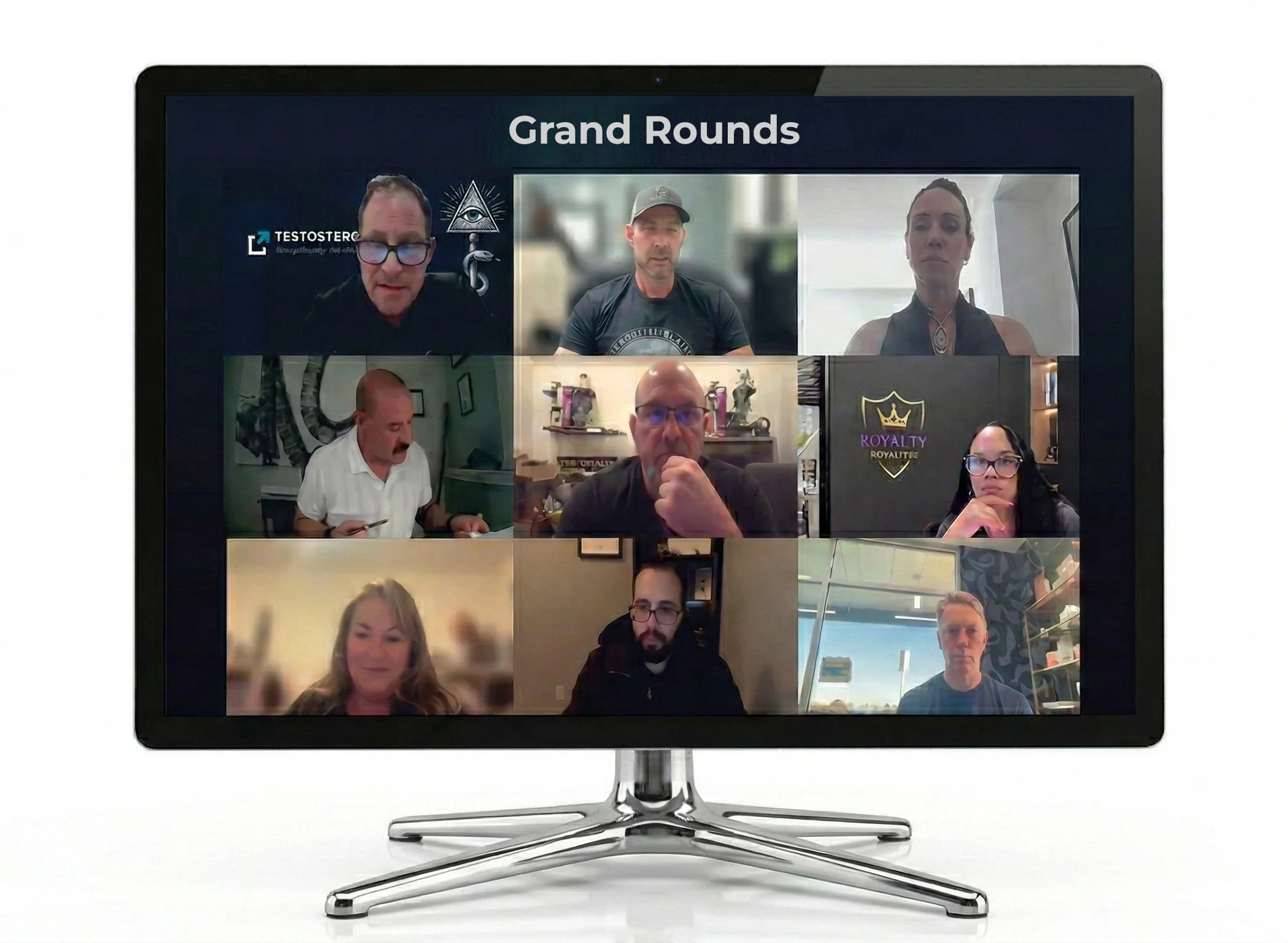
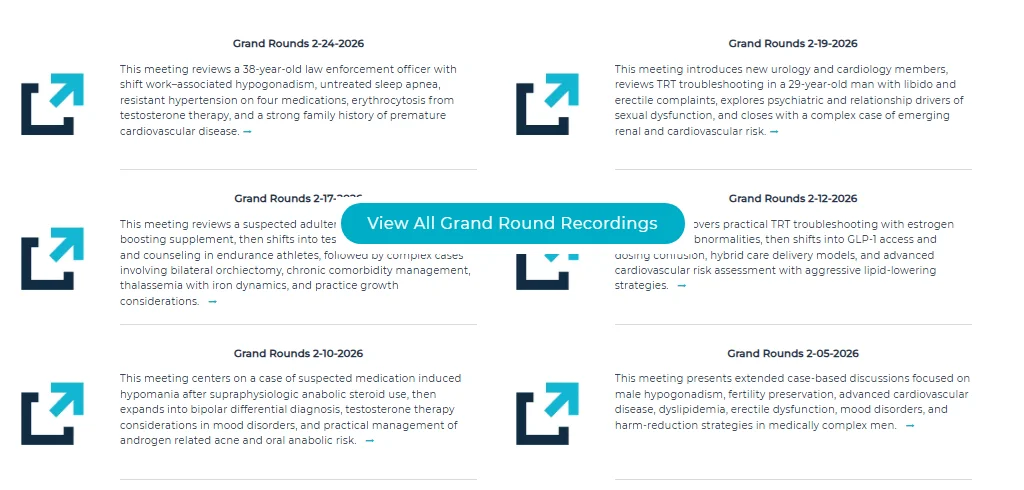
Recommended Grand Rounds Case Reviews
Advanced Clinical Training Insights
Insightful articles that expand upon the Advanced Clinical Training Program, offering deeper exploration of testosterone, androgen, and hormone-related health topics to support disciplined clinical reasoning and real-world application.
New articles are published every week and will be incorporated on the individual training course pages to augment the learning.